
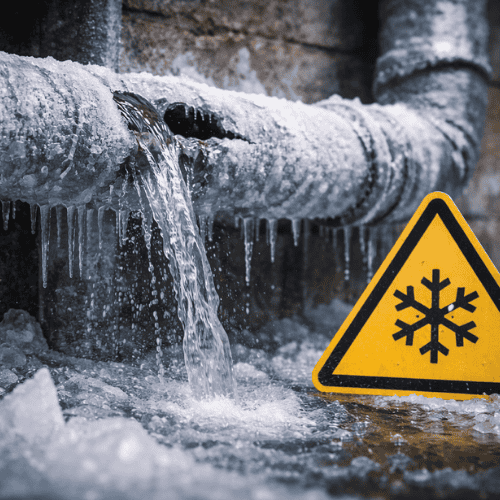
It’s a New England reality: pipes freeze. When temperatures drop below 20°F, any pipe in an unheated space is at risk. The good news is that frozen pipes don’t always burst—if you catch them early and thaw them correctly, you can often avoid disaster.
Here’s what to do when you turn on the faucet and nothing comes out.
How to Know If Your Pipes Are Frozen
The most obvious sign: you turn on a faucet and nothing comes out—or just a trickle. Other signs include:
- Frost visible on exposed pipes
- Strange smells coming from drains (blockage can push sewer odors back up)
- Bulging or cracked pipes (if you can see them)
- One fixture works, but another doesn’t (indicates a localized freeze)
Which Pipes Are Most at Risk?
In Salem and North Shore homes, the most vulnerable pipes are:
- Exterior walls: Pipes running through outside walls, especially on the north side of the house
- Unheated basements and crawl spaces: Even “heated” basements can have cold corners
- Attics: Supply lines to attic bathrooms are extremely vulnerable
- Garages: Pipes running through or along garage walls
- Kitchen and bathroom cabinets: Pipes under sinks on exterior walls
Step by Step Procedures For Suspected Frozen Pipes
1. Open the Faucet
Before you do anything else, open the faucet that’s not working—both hot and cold handles. As you thaw the pipe, water needs somewhere to go. Running water, even a trickle, helps melt ice in the pipe.
2. Locate the Frozen Section
Follow the pipe from the faucet back toward the main line. Look for areas where the pipe is exposed to cold: exterior walls, unheated spaces, or where it passes through concrete. Frost, bulging, or a noticeable temperature change on the pipe indicates the frozen section.
3. Thaw Safely (And What NOT to Do)
Safe thawing methods:
- Hair dryer: Apply heat evenly, moving back and forth along the frozen section
- Heat lamp or space heater: Position nearby (not touching) to warm the area
- Towels soaked in hot water: Wrap around the pipe
- Heating pad: Wrap around the pipe on low setting
- Increase the heat: Turn up your thermostat and open cabinet doors under sinks
NEVER use these methods:
Blowtorches, propane heaters, charcoal grills, or any open flame. These can damage pipes, start fires, or cause carbon monoxide poisoning.
4. Work from the Faucet Back
Start thawing at the faucet and work back toward the frozen section. This allows water and steam to escape through the open faucet as you thaw. Working from the blockage toward the faucet can trap steam and build pressure.
5. Check for Cracks or Leaks
As the pipe thaws, watch carefully for water spraying or dripping. Frozen water expands with tremendous force—it may have already cracked the pipe. If you see any leaks, shut off the main water supply immediately.
When to Call a Plumber
Call us immediately if:
- You can’t locate the frozen section
- The frozen section is inside a wall or ceiling
- You’ve tried thawing and the pipe still won’t flow
- You see cracks, bulging, or any water leaking
- Multiple pipes are frozen throughout the house
Our emergency plumbing team has professional thawing equipment and can locate frozen pipes inside walls without tearing open your home unnecessarily.
Preventing Frozen Pipes
The best frozen pipe is one that never freezes. For Massachusetts winters:
- Insulate exposed pipes in unheated areas with foam sleeves
- Let faucets drip during extreme cold—moving water is harder to freeze
- Open cabinet doors under sinks to let warm air circulate
- Keep your thermostat at 55°F or higher—even when you’re away
- Seal gaps and cracks where cold air enters near pipes
- Disconnect garden hoses and shut off water to exterior faucets in fall
If you have chronically freezing pipes, we can help with permanent solutions, especially during a emergency plumbing event when rerouting pipes away from exterior walls, adding insulation, or installing heat tape for vulnerable sections.