
If you have a basement on the North Shore, you have probably asked yourself: how does a sump pump work, and is mine actually protecting me? Coastal proximity, a high water table, clay-heavy soil, and seasonal nor’easters make basement water intrusion a fact of life across Salem, Beverly, Lynn, and the surrounding towns. A sump pump is the mechanical system that keeps that water out of your living space — but only when it is working correctly.
I am Mark Lausier Jr., a licensed master plumber in Salem, MA. We install and repair sump pump systems throughout the North Shore. Most homeowners know they have a pump in the basement, but few understand how a sump pump work cycle operates, when it needs attention, or what happens when it fails during a storm. This post covers all of that — plus what a new system costs and why battery backup is not optional in this area.
How a Sump Pump Actually Works
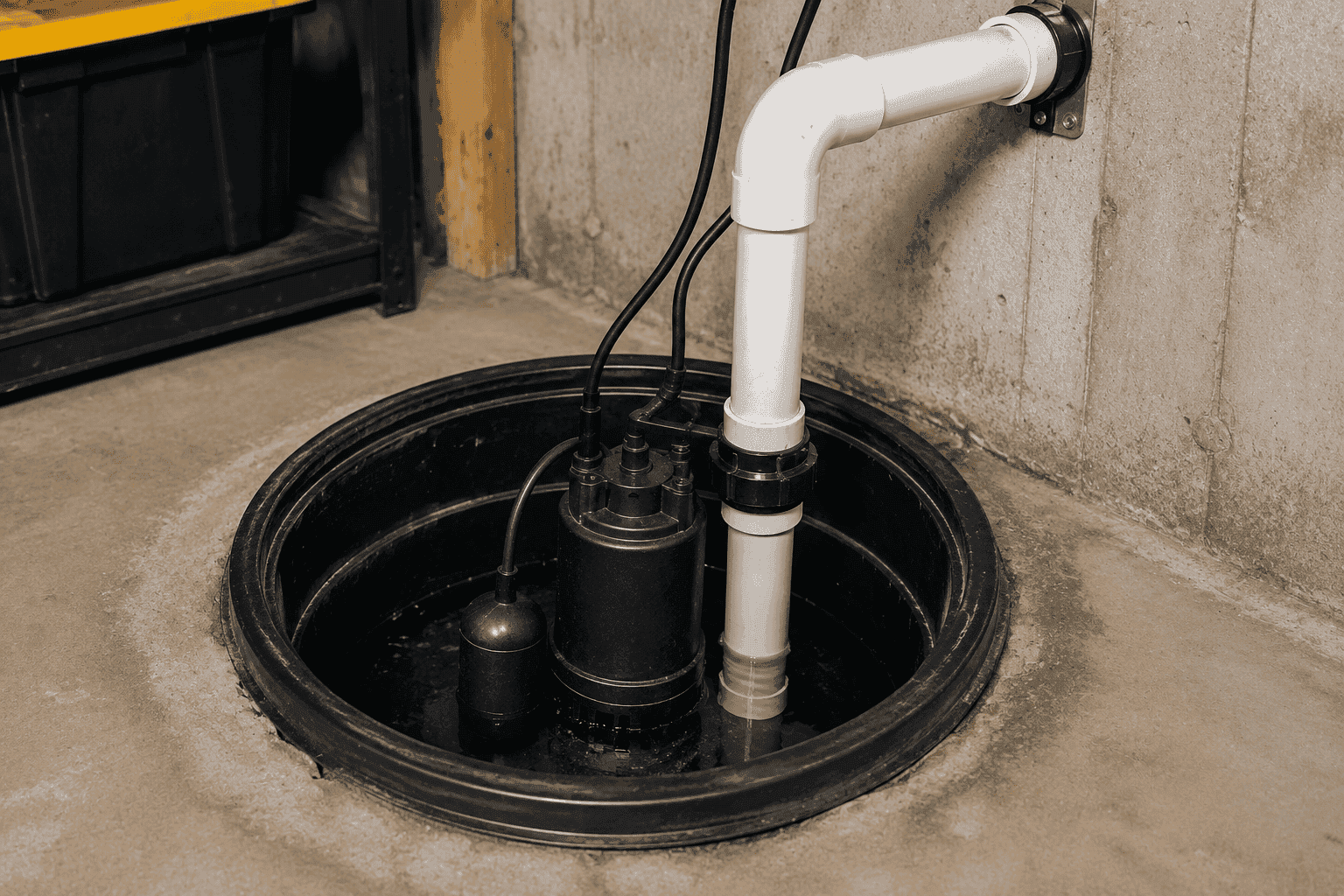
Understanding how does a sump pump work starts with its three main components: the sump pit, the pump itself, and the discharge line. They work together to collect groundwater before it reaches your basement floor and move it away from your foundation.
The Sump Pit
The pit is a hole dug into the lowest point of your basement floor, usually about 24 inches deep and 18 inches wide. It is lined with a plastic or fiberglass basin. Groundwater naturally flows toward this low point through the soil and through perimeter drain tile (if your home has it). The pit collects that water in a controlled location instead of letting it spread across your basement.
The Pump
The pump sits inside or above the pit. Most residential sump pumps use a float switch — the same concept as a toilet tank. As water fills the pit, the float rises. When it reaches a set level, the float triggers the pump motor. The pump then pushes water up through the discharge pipe and out of the house. Once the water drops low enough, the float falls and the pump shuts off.
Residential sump pumps come in two types. Submersible pumps sit inside the pit, below the water line. They run quieter and stay out of the way. Pedestal pumps mount above the pit on a stand, with only the intake extending into the water. Pedestal models are easier to service but louder. Most homes I install on the North Shore use submersible units.
The Discharge Line
The discharge line carries water from the pump to the exterior of your home. It exits through the foundation wall or rim joist and directs water away from the house — typically at least 10 feet from the foundation. A check valve on the line prevents pumped water from flowing back into the pit when the motor shuts off.
Where the discharge line terminates matters. Water dumped too close to the foundation just cycles back into the ground and re-enters the pit. In winter, discharge lines can freeze if they are not properly graded or insulated. Both are common problems I see during service calls across Salem and the North Shore.
Does Your Home Need a Sump Pump?
Not every home has one, but most homes in this area should. Before asking how does a sump pump work for your situation, consider whether these conditions apply.
Your basement has flooded before. Even once. If water has made it in, the conditions that allowed it have not changed. It will happen again — the only question is when.
You see water stains, efflorescence, or dampness on basement walls. White mineral deposits (efflorescence) on concrete or block walls mean water is moving through the foundation. A sump pump with perimeter drain tile captures that water before it pools.
Your home sits in a low-lying area or near the coast. Properties in Lynn, Marblehead, and coastal Salem neighborhoods deal with elevated water tables, especially in spring. The ground itself pushes water up through the basement slab.
Your neighbors have sump pumps. If the homes around you are pumping water, the same groundwater conditions affect your property. The water does not stop at your property line.
You are finishing your basement. Investing in carpet, drywall, and furniture below grade without a sump pump is a gamble. One storm or one wet spring can destroy thousands of dollars of work overnight.
Why Battery Backup Is Not Optional on the North Shore
Your sump pump runs on electricity. Knowing how does a sump pump work during a power outage is critical — because the storm that sends the most water toward your foundation is the same storm most likely to knock out your power. A nor’easter, a heavy thunderstorm, or a coastal flood event can leave you without electricity for hours or days.
A battery backup sump pump is a secondary pump with its own dedicated battery. It activates automatically when the power goes out or when the primary pump cannot keep up with volume. The battery typically provides 8–12 hours of pumping on a full charge, depending on how often it cycles.
I recommend battery backup on every installation we do. The cost of adding backup during initial install is a fraction of what a single flooding event costs to clean up. Learn more about our backup options on our sump pump installation page.
Signs Your Sump Pump Is Failing
Once you understand how does a sump pump work under normal conditions, spotting failure becomes easier. A pump that stops working rarely gives you advance warning on the day it fails. But there are signs in the weeks and months before that something is wrong.
The pump runs constantly or cycles on and off rapidly. This usually means the float switch is stuck, the check valve has failed (water flows back into the pit after each cycle), or the pump cannot handle the volume of water entering the pit.
Strange noises. Grinding, rattling, or humming sounds from the pump indicate a failing motor, a jammed impeller, or loose internal components. A healthy pump runs relatively quiet — loud operation means something mechanical has changed.
Visible rust or corrosion. Iron bacteria or corroded components reduce pump efficiency and eventually cause failure. Discolored water in the pit is often the first clue.
The pump does not turn on when you pour water into the pit. This is the simplest test. Pour a bucket of water into the sump pit. The float should rise and the pump should activate. No response means the switch, the motor, or the power supply has failed. Run this test every three to four months.
Your pump is over 7–10 years old. Most residential sump pumps last 7–10 years with proper maintenance. After that, reliability drops. Replacing a working pump on a planned schedule costs far less than emergency replacement after a failure floods your basement.
The same principle applies here as with water heater warning signs — act early before the failure causes real damage.
Sump Pump Maintenance Checklist
Knowing how does a sump pump work is only half the equation — keeping it working requires periodic attention. A sump pump is a mechanical device that sits in water, and without maintenance it will fail sooner than it should. Here is the routine I recommend.
Test the pump quarterly. Pour water into the pit until the float triggers. Verify it turns on, pumps the water out, and shuts off cleanly. Takes two minutes.
Clean the pit annually. Debris, gravel, and sediment collect in the bottom over time. Enough buildup can clog the pump intake or jam the impeller. Remove the pump, clean the pit, and reinstall.
Inspect the check valve. A failed check valve lets pumped water flow right back into the pit. You will notice the pump cycling more frequently than normal. Check valves cost little to replace and save the pump motor from overwork.
Check the discharge line before storm season. Walk the exterior and confirm the pipe is clear, the outlet is not blocked by dirt or ice, and water flows freely away from the foundation. A frozen or blocked line makes the pump useless even if it runs perfectly.
Test the battery backup. Disconnect the primary pump from power and verify the backup activates. Check the battery charge level. Batteries degrade over time — most need replacement every 3–5 years.
Schedule a professional inspection every 2–3 years. We check the motor, float switch, check valve, pit condition, and discharge line during a service visit. Catching a worn component before it fails is the whole point.
What Does a Sump Pump Cost in Salem and the North Shore?
Now that you understand how does a sump pump work and what maintenance it needs, here is what a system costs. Pricing depends on whether you are replacing an existing pump or installing new from scratch. New installations run higher because they involve cutting concrete, excavating the pit, and running a discharge line through the foundation.
Sump pump replacement (existing pit and discharge): $800–$2,000. Removing the old pump, installing a new submersible unit, and replacing the check valve. Straightforward when the pit and piping are already in place.
New sump pump installation (no existing system): $2,500–$5,000+. Includes cutting the basement slab, excavating and installing the pit, setting the pump, running the discharge line, and connecting to exterior drainage. Cost varies by layout and accessibility.
Battery backup addition: $800–$1,500. Adding a secondary pump and battery system alongside an existing primary pump. Less when done during initial installation.
Sump pump repair: $200–$600. Float switch replacement, check valve swap, discharge line repair, or motor service. Not every problem means a full replacement.
We provide a written quote after inspecting your basement. No surprises, no hidden fees.
When to Call a Plumber About Your Sump Pump
Some sump pump issues are minor — a stuck float you can free by hand, a discharge line you can clear with a garden hose. But if you have read this far about how does a sump pump work and realize yours is not functioning properly, these situations need a plumber.
Call us if: The pump does not respond to the bucket test. The motor runs but no water moves. Your basement is actively flooding and the pump cannot keep up. You need a battery backup installed. Your pump is over 10 years old and you want proactive replacement before the next storm season. You are finishing your basement and need a system installed for the first time.
Active basement flooding is an emergency plumbing situation. Knowing how to shut off your water and where your sump pump breaker is located can limit damage while you wait for help.
Frequently Asked Questions
How long does a sump pump last?
Can I install a sump pump myself?
Should a sump pump run during dry weather?
Is it legal to connect a sump pump to the sewer in Massachusetts?
Need a Sump Pump Installed, Repaired, or Inspected?
Lausier Brothers installs and services sump pump systems across Salem and the North Shore. We carry battery backup systems and can add one to your existing pump.
Call (978) 587-2073 | Schedule Online
MA Master Plumber #17257 · Journeyman License #33745 · 24/7 Emergency Service
About the Author
Mark Lausier Jr. is the co-owner and Master Plumber at Lausier Brothers, Inc. in Salem, Massachusetts. He holds MA Master Plumber License #17257 and has spent years working on residential and commercial plumbing systems across the North Shore — from sump pump installations and sewer line repairs to water heater replacements and emergency calls. Mark comes from three generations of plumbers. His grandfather, Frederic Lausier, served as Marblehead’s Plumbing Inspector for over 60 years. Lausier Brothers is a family-owned, locally operated plumbing company serving Salem, Beverly, Peabody, Lynn, Marblehead, Danvers, and Swampscott. Call (978) 587-2073 or book online.