
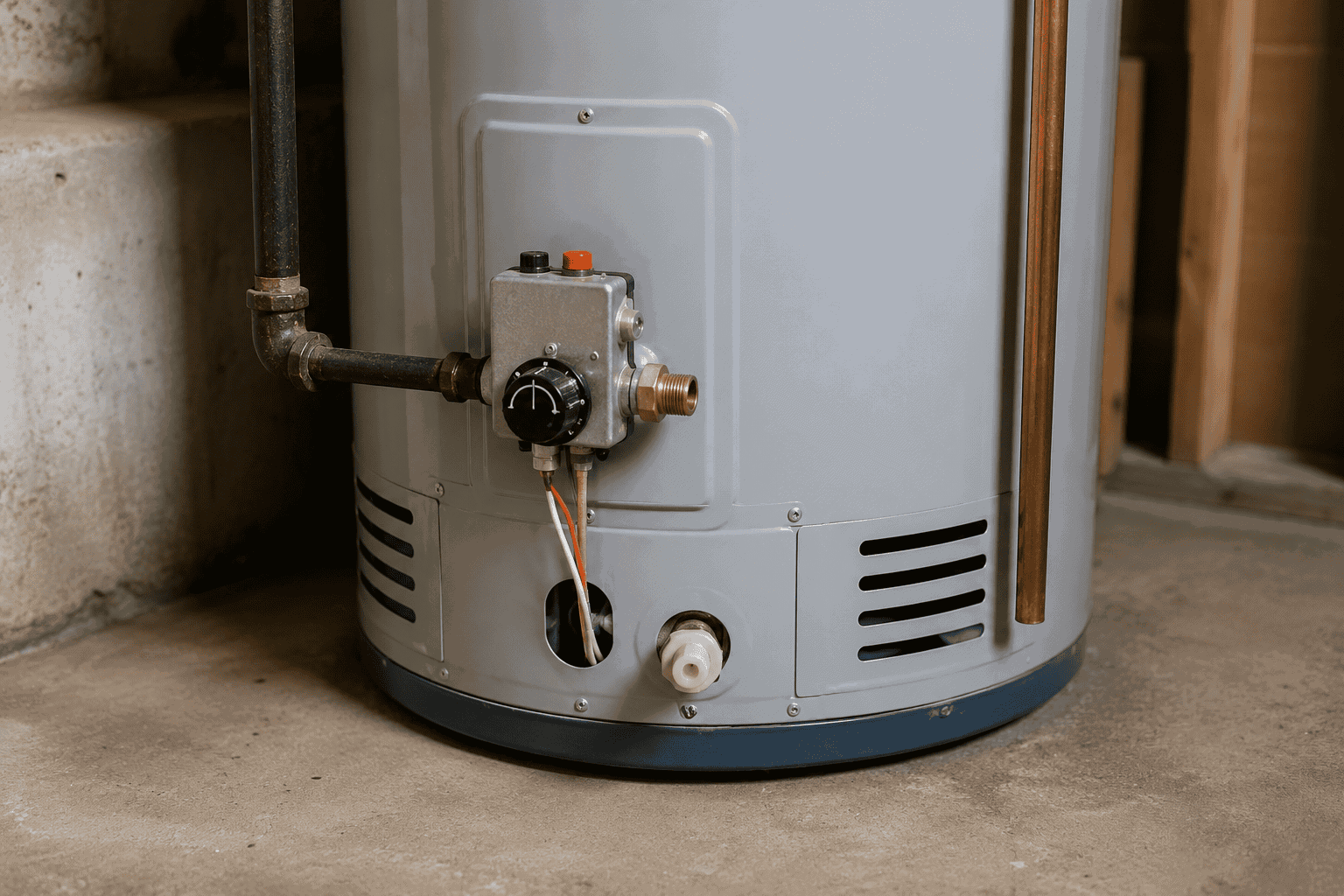
Your water heater is making noise — popping, rumbling, screeching, or banging — and it is trying to tell you something. Some of those sounds are minor and fixable in under an hour. Others are warning you that the tank is on its way out, whether you are ready for it or not.
I am Mark Lausier Jr., a licensed master plumber here in Salem, MA. Over the past several years I have inspected and repaired hundreds of water heaters across the North Shore. Most homeowners call about noise after living with it for weeks or months, hoping it goes away on its own. It almost never does. The good news? The type of sound your water heater makes tells me a lot about what is wrong — sometimes before I walk through your door.
Below I cover the five most common water heater noises, what causes each one, and whether you are looking at a repair or a replacement. I also break down what each fix typically costs in the Salem and North Shore area.
Popping or Rumbling — The Most Common Water Heater Noise
This is the sound I hear about most. Homeowners describe it as popping, rumbling, or knocking from the bottom of the tank. It often gets louder over time. Some people compare it to a coffee percolator. Others say it sounds like the tank is boiling.
In a way, it is. The cause is almost always sediment buildup at the bottom of the tank. Salem and much of the North Shore gets water with moderate mineral content. Over time, calcium and magnesium settle to the bottom and harden into scale. When the burner fires, it heats water trapped beneath that layer. The water flashes to steam, and the steam bubbles pop through the sediment — that is the noise you hear.
What Sediment Does to Your Water Heater
The noise itself is not the problem — it is the symptom. Sediment causes three real issues. First, your burner runs longer to heat water through the layer, raising your gas or electric bill. Second, concentrated heat at the bottom speeds up corrosion of the tank lining, cutting the unit’s life short. Third, thick sediment can block the drain valve and make future maintenance harder.
Noticing other signs your water heater is failing alongside the noise — rusty water, inconsistent temperatures, water pooling at the base? The sediment has likely been building for a long time.
Fix: Flush the Tank
When sediment has not yet hardened, a professional tank flush removes it and stops the noise. We drain the tank completely, run fresh water through until it clears, and inspect the anode rod while the tank is open. A professional flush in the Salem area typically runs $150–$250. Exact cost depends on drain valve condition and how long it has been since the last service.
Tanks that go years without maintenance develop hardened sediment that flushing cannot fully clear. At that point, I check whether the tank lining shows damage. Compromised lining means we are looking at water heater replacement rather than repair.
Screeching or Whistling — A Valve or Flow Problem
A high-pitched screech or whistle means water is pushing through a restricted opening. The usual culprits are a partially closed inlet valve, a faulty temperature and pressure (T&P) relief valve, or a failing check valve in the supply line.
This sound often starts suddenly rather than building gradually. Homeowners in Beverly, Peabody, and Danvers with older homes sometimes hear it after municipal water work changes the supply pressure.
Fix: Inspect and Replace the Valve
Start by checking whether the inlet valve on top of the water heater is fully open. A partially closed valve is the easiest fix — opening it fully may stop the noise right away. When the noise persists after that check, the T&P valve likely needs replacement. That repair typically costs $150–$300 for parts and labor. One important note: a T&P valve actively discharging water (dripping or streaming from the overflow pipe) should never wait. That valve is protecting you from dangerous pressure buildup inside the tank.
Banging or Hammering — Usually Not the Water Heater Itself
A sharp, sudden bang when a faucet or valve closes goes by the name water hammer. Despite how it sounds, the noise usually comes from the pipes — not the water heater. A fast-closing valve (like a washing machine solenoid or a single-lever faucet) creates a shockwave in the supply line when it shuts off. That shockwave travels through the pipes and sounds loudest near the water heater, where the large tank acts as a resonating chamber.
Fix: Water Hammer Arrestors or Pipe Securing
Water hammer arrestors — small devices on the supply line near the problem valve — absorb the shockwave and stop the noise. Unsecured pipes vibrating against framing or joists cause a similar sound, and re-securing them with proper hangers fixes it. In older North Shore homes with copper or galvanized pipes running through unfinished basements, loose hangers are a common culprit. Either fix typically runs $150–$400 depending on accessibility.
Banging alongside other symptoms — low water pressure, discolored water, or visible pipe corrosion — may point to a larger issue. Aging galvanized pipes in pre-1970s Salem homes develop internal restrictions that amplify pressure surges. In those cases, we assess the broader plumbing system rather than just treating the noise.
Sizzling or Hissing — Condensation or a Leak
A sizzling sound from a gas water heater often means water is dripping onto the burner assembly below the tank. Two things cause this: condensation or a leak.
Condensation is normal during heavy hot water usage. Cold water rushing into the tank contacts the hot walls, and moisture forms on the exterior and drips down. You will notice it more in colder months. The sizzling stops once the tank reheats.
A leak is a different story. Persistent sizzling calls for a visual check around the base of the unit. Leaking T&P valves, corroded fittings, and cracks in the tank itself all produce a steady drip onto the burner. When the tank itself is cracked, repair is not an option — only replacement.
When to Call
Cannot identify the source of the drip? Or worse — the sizzling comes with a rotten-egg smell? Shut off the gas supply to the water heater and call us at (978) 587-2073. A gas smell near a water heater is a gas line issue, not a water heater issue, and needs immediate attention. Read our guide on how to detect a gas leak for details on what to do next.
Ticking or Tapping — Heat Trap Nipples
A rhythmic ticking or tapping from the top of the water heater usually comes from heat trap nipples — small check valves at the hot and cold connections on top of the tank. Their job is to stop hot water from rising back through the cold supply line, reducing heat loss. The ticking comes from the small internal ball or flapper opening and closing as water flows.
This sound is annoying but not harmful. Your water heater is working fine. Want it gone? We can swap the heat trap nipples for standard dielectric nipples — a minor repair that takes about 30 minutes. Typical cost: $100–$200.
When Does Water Heater Noise Mean It Is Time to Replace?
Not every noise means a new water heater. But some combinations of noise, age, and other symptoms point clearly toward replacement. Here is how I think about it during an assessment.
Noise alone on a newer unit (under 8 years): Almost always repairable. A flush, a valve swap, or a minor adjustment resolves it. Worth fixing.
Noise plus one other symptom on a mid-age unit (8–12 years): Repair is still viable, but I always give you the cost comparison — repair cost now versus replacement cost and expected remaining lifespan. Sometimes the math says replace. Sometimes it says repair.
Noise plus multiple symptoms on an older unit (12+ years): Loud rumbling, rusty water, leaking at the base, and age over 12 years? Replacement is the right call. Spending $300–$500 on repairs for a unit with 1–2 years left is poor value.
Considering a replacement? We install tank, tankless, and hybrid heat pump water heaters. Each type has different cost, efficiency, and lifespan trade-offs. Our water heater installation page breaks down the options. You can also call us for an on-site assessment.
How to Prevent Water Heater Noise Before It Starts
Most water heater noise comes down to skipped maintenance. Here is what I recommend to every homeowner I work with on the North Shore.
Flush the tank once a year. This clears sediment before it hardens. Comfortable doing it yourself? It takes about 30 minutes with a garden hose. Otherwise, we include tank flushing as part of our standard water heater service.
Check the anode rod every 2–3 years. This sacrificial metal rod inside the tank attracts corrosion away from the walls. Once depleted, the tank itself starts corroding — leading to noise, rust, and eventually leaks. A new anode rod costs $150–$250 and can add years to your water heater’s life.
Listen for changes. A water heater that has been quiet for years and suddenly starts making noise is telling you something changed. Do not wait months hoping it resolves — early diagnosis means a repair, not a replacement.
Know when your unit went in. Cannot find the date? The serial number on the manufacturer’s label encodes it. Search your brand’s serial number format online to decode the manufacture year. Units approaching 10–12 years deserve proactive replacement planning — an emergency swap after a failure always costs more than a planned one.
Frequently Asked Questions
Is a noisy water heater dangerous?
How much does it cost to fix a noisy water heater in Salem, MA?
Should I replace my water heater if it is making noise?
Why is my water heater popping after I had it flushed?
Water Heater Making Noise? We Can Diagnose It.
Lausier Brothers is a family-owned plumbing company based in Salem, MA. We serve Salem, Beverly, Peabody, Danvers, Marblehead, Lynn, and Swampscott.
Call (978) 587-2073 | Schedule Online
MA Master Plumber #17257 · Journeyman License #33745 · 24/7 Emergency Service
About the Author
Mark Lausier Jr. is the co-owner and Master Plumber at Lausier Brothers, Inc. in Salem, Massachusetts. He holds MA Master Plumber License #17257 and has spent years working on residential and commercial plumbing systems across the North Shore — from water heater replacements and gas line installations to emergency repairs and full repiping jobs in older Salem homes. Mark comes from three generations of plumbers. His grandfather, Frederic Lausier, served as Marblehead’s Plumbing Inspector for over 60 years. Lausier Brothers is a family-owned, locally operated plumbing company serving Salem, Beverly, Peabody, Lynn, Marblehead, Danvers, and Swampscott. Call (978) 587-2073 or book online.