
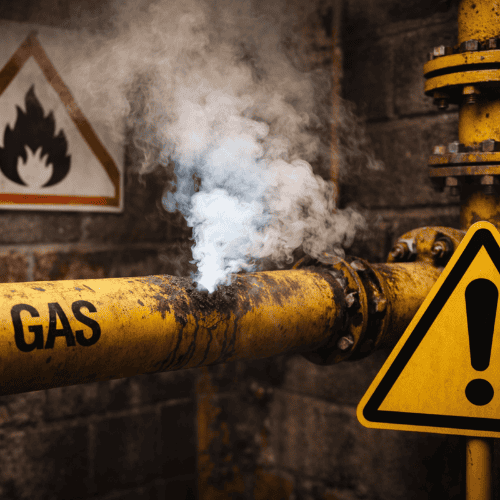
A gas leak is one of the most dangerous situations you can face in your home. Natural gas is highly flammable, and in enclosed spaces, it can cause explosions. The good news: gas companies add a distinctive odorant called mercaptan to natural gas, making leaks easier to detect. But not all leaks are obvious.
Here’s how to recognize a gas leak—and exactly what to do if you suspect one.
If you smell gas strongly right now:
Stop reading. Leave your home immediately. Don’t turn on or off any lights, appliances, or electronics. Once you’re outside and away from the building, call 911 or National Grid’s emergency line: 1-800-233-5325.
Signs of a Gas Leak
1. The Smell: Rotten Eggs or Sulfur
Natural gas is odorless, but utilities add mercaptan—a chemical that smells like rotten eggs or sulfur—so you can detect leaks. If you smell this odor, especially near gas appliances or gas lines, treat it seriously.
However, small leaks may produce only a faint odor that’s easy to dismiss. Trust your instincts—if something smells “off,” investigate.
2. Hissing or Whistling Sounds
A damaged gas line or loose connection can produce a hissing, whistling, or roaring sound as gas escapes. Check near:
- Gas meter
- Gas stove and oven
- Gas dryer
- Water heater
- Furnace or boiler
- Fireplace gas valve
3. Dead or Dying Vegetation
For outdoor gas leaks, watch for unexplained dead patches in your lawn or garden. Natural gas displaces oxygen in the soil, killing grass and plants above a leak. If you have a healthy lawn with one mysteriously dead patch, a gas line could be the cause.
4. Bubbles in Standing Water
If you notice persistent bubbling in puddles, wet areas, or even in a toilet bowl, it could indicate gas escaping from underground pipes and rising through the water.
5. Physical Symptoms
Gas exposure affects your body. Symptoms include:
- Headaches
- Dizziness or lightheadedness
- Nausea
- Fatigue
- Difficulty breathing
- Irritated eyes and throat
If these symptoms appear only when you’re home and improve when you leave, a gas leak (or carbon monoxide leak) could be the cause.
6. Higher-Than-Expected Gas Bills
A significant increase in your gas bill without a change in usage could indicate a leak. Gas is escaping somewhere, and you’re paying for it.
What to Do If You Suspect a Gas Leak
1. Don’t create sparks or flames
Don’t turn lights on or off. Don’t use phones inside. Don’t light matches. Don’t start your car in an attached garage.
2. Leave the building immediately
Get everyone out—including pets. Leave doors open to help gas dissipate. Move at least 100 feet away from the building.
3. Call from outside
Once you’re safely away, call 911 or National Grid’s emergency line: 1-800-233-5325. They’ll send someone to assess the situation.
4. Don’t return until cleared
Wait for the fire department or gas company to tell you it’s safe to re-enter.
After the Leak Is Addressed
Once National Grid or the fire department has secured the immediate danger, you’ll likely need a licensed plumber to repair the gas line before service can be restored. The gas company shuts off service until repairs are made and inspected.
Our gas line repair team can respond quickly to make repairs, coordinate any required inspections, and get your gas service restored safely.
Preventing Gas Leaks
- Annual inspections: Have gas appliances and connections inspected yearly
- Professional installation: Only licensed plumbers should install or modify gas lines
- Know your shutoff: Learn where your gas meter shutoff is located
- Install detectors: Natural gas detectors (different from CO detectors) add another layer of protection
- Watch for corrosion: Visible rust on gas pipes or connections warrants inspection
As licensed gas fitters (MA Master Plumber #17257), we install, repair, and inspect gas lines throughout Salem and the North Shore. If you have concerns about your gas system, we can perform a thorough safety inspection.