
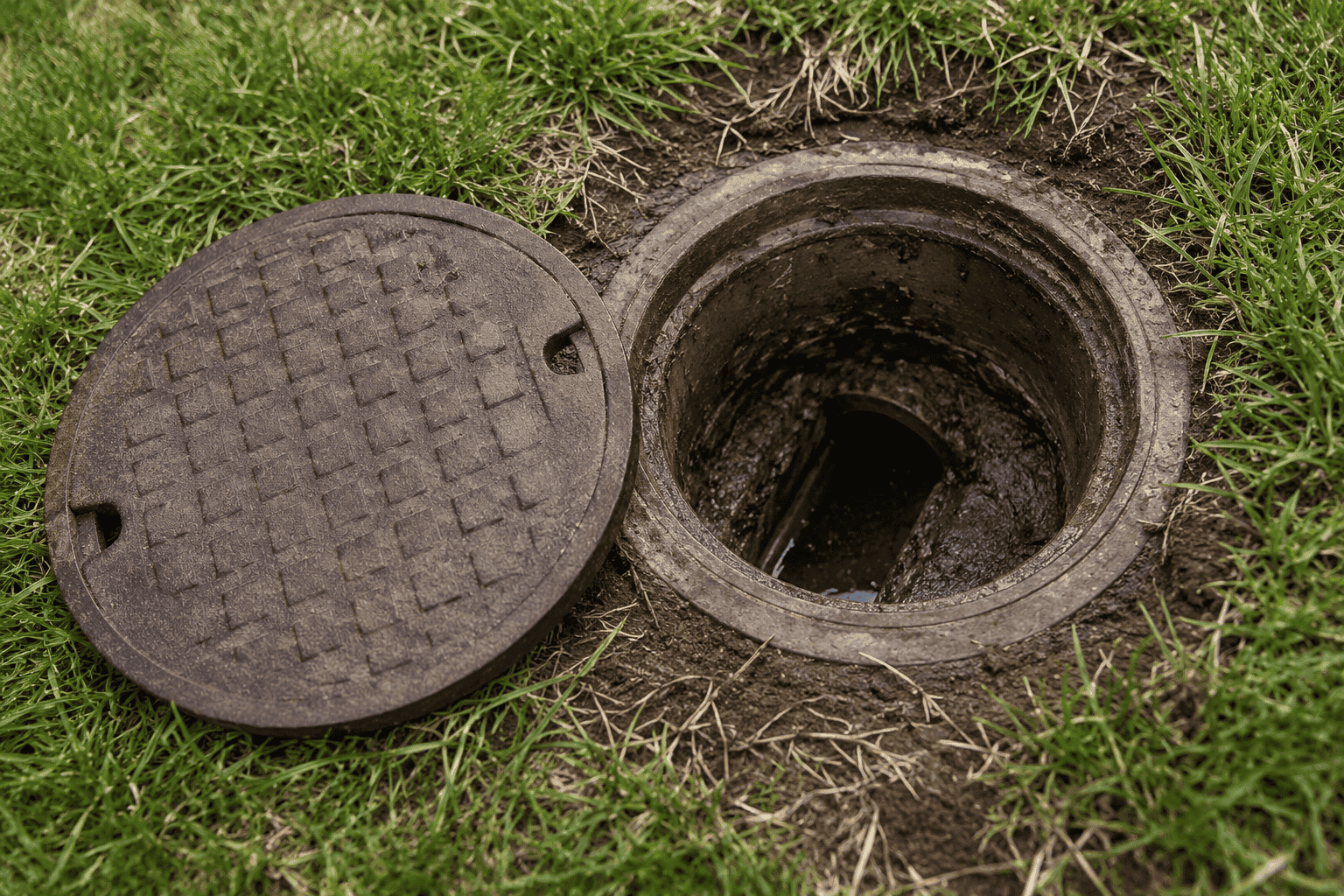
Sewer line problems do not announce themselves politely. They start with small, easy-to-ignore signals — a slow drain here, a gurgle there — and escalate into sewage backing up through your basement floor or pooling in your yard. By the time most homeowners call a plumber, the damage has been building underground for months or years.
I am Mark Lausier Jr., a licensed master plumber in Salem, MA. A large part of our work at Lausier Brothers involves diagnosing and repairing sewer lines in homes across the North Shore. Many of the worst jobs I have seen could have been caught earlier if the homeowner had recognized the warning signs. This post walks through the eight most common signs of a main sewer line problem, what causes sewer line damage in this area, how we diagnose it, and what repairs typically cost.
8 Warning Signs Your Main Sewer Line Has a Problem
Your main sewer line runs from your house to the municipal sewer main under the street. Every drain in your home — kitchen, bathroom, laundry, floor drains — feeds into it. When this single pipe develops a problem, the symptoms show up in multiple places at once. That pattern is the key thing to watch for.
1. Multiple Drains Backing Up at the Same Time
One slow drain is usually a local clog — hair in a bathroom sink, grease in a kitchen line. But when two or more drains back up together, the blockage is almost certainly downstream in the main sewer line. The classic scenario: you flush a toilet upstairs and water comes up through a basement floor drain. That means the waste has nowhere to go because the main line is obstructed.
2. Gurgling Sounds From Drains or Toilets
Gurgling happens when air gets trapped in the drain system. A partial blockage in the main line restricts normal flow, forcing air back through the water in your drain traps. You will often hear it from a toilet or basement drain when running water elsewhere in the house. Occasional gurgling might be a vent issue. Consistent gurgling from multiple fixtures points to the main line.
3. Sewage Smell in Your Yard or Basement
You should never smell sewage inside or outside your home. A working sewer system is sealed. When you catch that unmistakable rotten-egg odor near your foundation, in the basement, or over your yard, it means raw sewage is escaping the pipe somewhere underground. A cracked sewer line or a broken joint can release gas and waste into the surrounding soil.
4. Unusually Green or Lush Patches in Your Lawn
Sewage is an effective fertilizer. A section of lawn that is dramatically greener or thicker than the rest — especially in a strip or concentrated area — may be growing directly over a leaking sewer pipe. The leak feeds nutrients into the soil, and the grass responds. It looks healthy on the surface, but something ugly is happening underneath.
5. Sinkholes or Soft, Sunken Spots in Your Yard
A leaking sewer line saturates and erodes the soil around it. Over time, the ground above the pipe settles or collapses, creating visible depressions. Soft spots that appear along the path from your house to the street are a strong indicator. In some cases, a full sinkhole can develop. This is an advanced stage — the pipe has likely been leaking for a long time.
6. Slow Drains Throughout the House
A main sewer line that is partially blocked — whether by roots, sediment, or a belly (sag) in the pipe — restricts flow from every fixture in the house. Drains that used to work fine start running slower, and no amount of drain cleaner fixes them. The common mistake is treating each slow drain individually. When every drain in the house is sluggish, the problem is shared — it is in the main line.
7. Frequent Backups Despite Clearing the Drain
If you call for a drain cleaning and things improve for a few weeks or months before backing up again, the real issue is in the sewer line, not the individual drain. Recurring backups in the same location — especially the lowest drain in the house — mean the cleaning is treating the symptom while the cause remains underground. Root intrusion is the most common reason for this pattern on the North Shore.
8. Foundation Cracks or Moisture Along Basement Walls
A chronically leaking sewer line near your foundation can undermine the soil supporting it. The result is settling, shifting, and new cracks in basement walls or floors. Persistent dampness along a basement wall that cannot be explained by surface water or grading issues may be caused by an underground sewer leak. This is especially common in older Marblehead and Swampscott homes with original cast iron or clay sewer lines.
What Causes Sewer Line Damage on the North Shore?
The North Shore’s housing stock and soil conditions create a specific set of sewer line risks. These are the causes I see most often.
Tree root intrusion. Roots seek moisture. They find their way into joints, cracks, and connections in your sewer pipe, then grow inside the line until they block flow entirely. Mature maples, oaks, and willows common across Salem, Beverly, and Danvers can send roots 20+ feet from the trunk. Root problems come back after clearing unless the entry point is repaired.
Aging pipe materials. Homes built before the 1970s on the North Shore often have clay (orangeburg) or cast iron sewer laterals. Clay pipes crack and separate at the joints over decades. Cast iron eventually corrodes through. Both types are at or past their expected lifespan in most pre-1970 homes in this area.
Ground shifting and settling. New England’s freeze-thaw cycle moves soil seasonally. Over years, the soil beneath a sewer pipe can shift enough to create a belly — a low point where waste and water collect instead of flowing. Bellied pipes develop chronic partial blockages.
Grease and debris buildup. Even small amounts of grease poured down a kitchen drain coat the inside of the sewer pipe over time. Combined with other debris, grease narrows the pipe diameter until flow slows and backups begin. This accelerates in older pipes with rough interior surfaces.
How We Diagnose a Sewer Line Problem
We do not guess about sewer problems. Our process starts with an HD sewer camera inspection — a small waterproof camera fed through the cleanout into your main sewer line. It gives us a live video feed of the pipe interior, showing exactly what the problem is and where it is located.
Camera inspection reveals roots, cracks, bellies, offsets at joints, corrosion, collapses, and debris buildup. You see what we see on the monitor. Knowing the exact problem and its location means we can recommend the right repair — not the most expensive one.
For homebuyers, a pre-purchase sewer scope is worth every dollar. A standard home inspection does not cover the sewer lateral. Buying a home with a failing sewer line means inheriting a $5,000–$15,000 repair the seller did not disclose. We run sewer scopes for buyers throughout the North Shore, and they regularly save people from expensive surprises. Learn more on our sewer line services page.
What Does Sewer Line Repair Cost in Salem and the North Shore?
Sewer work has a wide cost range because every job is different. The pipe material, depth, length, accessibility, and type of damage all affect pricing. Here is what I typically see on the North Shore.
Sewer camera inspection: $250–$500. This is the diagnostic step. Scope the line first, then make decisions based on what you actually see. Every repair or replacement project at Lausier Brothers starts with a camera inspection.
Spot repair (localized damage): $1,500–$4,000. A cracked section, a single root-damaged joint, or a localized offset can often be fixed by exposing and replacing just that section of pipe. This is the most cost-effective repair when the rest of the line is in good condition.
Full sewer line replacement: $5,000–$15,000+. When the entire pipe is deteriorated — common with clay and old cast iron lines — replacement is the right call. Cost depends on the length of the run, depth of the pipe, landscaping and hardscape in the way, and whether trenchless methods are an option.
Trenchless sewer repair: Pricing varies based on method and pipe condition. Trenchless methods like pipe lining work by inserting a resin-coated liner inside the existing pipe, creating a new pipe within the old one. Not every job qualifies — the existing pipe needs to be structurally intact enough to support the liner. We assess trenchless viability during camera inspection.
These are general ranges. We provide a written quote with exact scope and pricing after inspection, before any work begins.
Repair or Replace? How I Make the Call
Not every sewer line problem means full replacement. Here is how I think about it after reviewing the camera footage.
Repair makes sense when: The damage is localized to one section. The rest of the pipe is in solid condition. The pipe material still has useful life remaining (newer PVC or ABS). Roots entered through a single joint that can be sealed after clearing.
Replacement makes sense when: The pipe is clay or old cast iron with widespread deterioration. Camera shows multiple problem points along the run. The line has a belly that cannot be fixed without excavation. You are experiencing recurring backups despite repeated cleanings — the pipe is structurally failing.
The camera inspection takes the guesswork out of this decision. You see the footage, we explain what we are looking at, and we recommend the option that makes financial sense for the condition of your specific pipe.
How to Protect Your Sewer Line
You cannot prevent every sewer problem — aging pipes will eventually fail regardless. But you can catch issues early and avoid accelerating the damage.
Get a camera inspection every 3–5 years. Think of it as a checkup for the pipe you never see. Catching a root intrusion or early-stage crack before it becomes a full blockage saves thousands.
Keep grease out of drains. Wipe pots and pans with a paper towel before washing. Grease hardens inside sewer pipes and builds up over years. Once it narrows the line, every other problem accelerates.
Know what is planted near your sewer line. Before planting trees, find out where your lateral runs. Mature trees with aggressive root systems planted within 10–15 feet of a sewer line will eventually find their way in.
Watch for the warning signs above. Early action is the difference between a $2,000 spot repair and a $12,000 full replacement. If your home was built before 1970 and the sewer line has never been scoped, schedule an inspection — the pipe is past its expected lifespan.
Already noticing warning signs? Knowing how to shut off your water in an emergency can prevent additional damage while you wait for a plumber to arrive.
Frequently Asked Questions
How do I know if my sewer line is clogged or just a single drain?
Am I responsible for the sewer line under the street?
How long does a sewer line last?
Does homeowner insurance cover sewer line repair?
Think You Have a Sewer Line Problem? We Will Find Out.
Lausier Brothers provides sewer camera inspection, repair, and replacement across Salem and the North Shore. We show you what we find and give you honest options.
Call (978) 587-2073 | Schedule Online
MA Master Plumber #17257 · Journeyman License #33745 · 24/7 Emergency Service
About the Author
Mark Lausier Jr. is the co-owner and Master Plumber at Lausier Brothers, Inc. in Salem, Massachusetts. He holds MA Master Plumber License #17257 and has spent years working on residential and commercial plumbing systems across the North Shore — from sewer line replacements and water main repairs to water heater installations and emergency plumbing calls. Mark comes from three generations of plumbers. His grandfather, Frederic Lausier, served as Marblehead’s Plumbing Inspector for over 60 years. Lausier Brothers is a family-owned, locally operated plumbing company serving Salem, Beverly, Peabody, Lynn, Marblehead, Danvers, and Swampscott. Call (978) 587-2073 or book online.