
Your toilet won’t stop running, and the sound is driving you crazy. That constant hissing or trickling after a flush is more than annoying — it is wasting water around the clock. A toilet that won’t stop running can waste 200 gallons or more per day, which shows up on your water bill fast.
I am Mark Lausier Jr., a licensed master plumber in Salem, MA. Running toilets are one of the most common calls we get at Lausier Brothers. The good news is that most causes are straightforward and inexpensive to fix. This post walks through why your toilet won’t stop running, how to diagnose which part has failed, what you can fix yourself versus what needs a plumber, and what repairs typically cost on the North Shore.
How Your Toilet’s Fill System Works
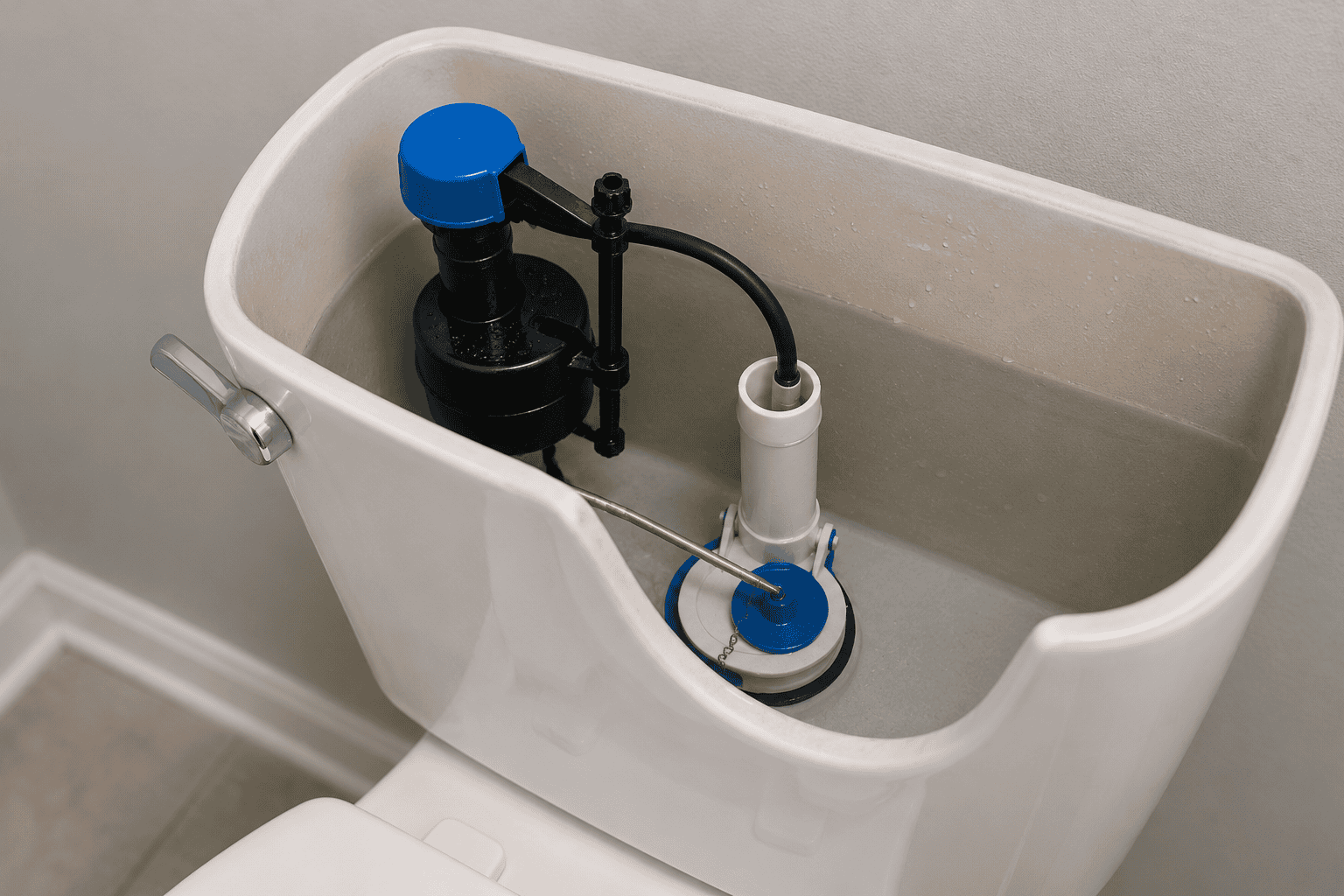
Before diagnosing why a toilet won’t stop running, it helps to understand the parts inside the tank. Every standard toilet has the same basic components working together.
When you push the handle, it lifts the flapper — a rubber seal at the bottom of the tank. Water rushes from the tank into the bowl, creating the flush. Once the tank empties, the flapper drops back down and seals the opening. The fill valve then opens and refills the tank with fresh water. A float (either a ball on an arm or a cylinder on the fill valve) rises with the water level. When the float reaches the set point, it shuts off the fill valve. The overflow tube sits in the center of the tank as a safety outlet — if the water rises too high, it drains into the bowl instead of flooding your bathroom floor.
When any of these parts fails, the result is a toilet that won’t stop running. The specific part that failed determines the fix.
Cause #1: A Worn or Warped Flapper
This is the most common reason a toilet won’t stop running. The flapper is a rubber component that seals the flush valve opening at the bottom of the tank. Over time, the rubber degrades — it warps, hardens, or develops mineral buildup that prevents a tight seal. Water leaks slowly past the flapper into the bowl, and the fill valve keeps cycling to replace it.
How to Test It
Add a few drops of food coloring to the tank water. Wait 15–20 minutes without flushing. If colored water appears in the bowl, the flapper is leaking.
How to Fix It
Shut off the water supply valve behind the toilet. Flush to drain the tank. Unhook the old flapper from the overflow tube ears, disconnect the chain from the handle lever, and install the new one. Flappers cost $5–$10 at any hardware store and take about 10 minutes to swap. This is the most common DIY toilet repair, and it resolves the majority of running toilet issues.
One note: bring the old flapper to the store to match the size. Not all flappers are universal — older toilets in Beverly and Danvers homes sometimes use non-standard sizes that require a specific replacement.
Cause #2: A Failing Fill Valve
The fill valve controls water flow into the tank after each flush. When it wears out, it may not shut off completely — leaving a constant trickle or hiss even after the tank is full. You will usually hear the sound coming from inside the tank rather than from the bowl.
How to Test It
Lift the float arm or push down on the float cup while the toilet is running. If the water stops, the fill valve itself is fine — the float just needs adjusting (see Cause #3 below). If the water keeps running even with the float held up, the fill valve has failed and needs replacement.
How to Fix It
Fill valve replacement is a step up from a flapper swap but still manageable for a confident DIYer. Turn off the supply, flush and drain the tank, disconnect the supply line, remove the old valve, and install the new one. Universal fill valves cost $10–$20 and most come with clear instructions. The whole job takes about 30 minutes.
If you are not comfortable working with the supply line connection — or if the shut-off valve behind the toilet is old and does not close fully — call a plumber. A corroded shut-off valve that fails during a fill valve replacement turns a simple repair into a flooding situation.
Cause #3: The Float Is Set Too High
If the float is set too high, the tank overfills and water continuously drains into the overflow tube. This creates a toilet that won’t stop running even though no parts are broken — the water level is simply above the overflow line.
How to Fix It
Look inside the tank while it fills. The water level should sit about half an inch below the top of the overflow tube. If water is flowing into the overflow tube, the float needs lowering.
For ball floats (older toilets): bend the brass rod slightly downward so the ball sits lower. For cylinder floats (newer toilets): pinch the clip on the side of the float and slide it down the fill valve shaft. Small adjustment, big difference. This fix takes under a minute and costs nothing.
Cause #4: A Cracked Overflow Tube
The overflow tube can crack at the base where it connects to the flush valve assembly. A crack lets water leak from the tank into the bowl continuously, mimicking a flapper problem. You might replace the flapper and still have a toilet that won’t stop running — because the water is escaping through the cracked tube, not past the flapper.
A cracked overflow tube requires replacing the entire flush valve assembly. This involves removing the tank from the bowl — a job that goes beyond basic DIY territory. Tank bolts on older toilets corrode and can snap, and the tank-to-bowl gasket needs replacement at the same time. This is one of the situations where calling a plumber saves you from turning a repair into a bigger problem.
Cause #5: The Flapper Chain Is Too Short or Tangled
The chain connecting the flush handle to the flapper needs just the right amount of slack. Too short, and the chain holds the flapper slightly open — allowing a constant leak. Too long, and it can get caught under the flapper when it closes, preventing a full seal.
This is the fastest fix. Open the tank lid and inspect the chain. Adjust the length so there is about half an inch of slack when the flapper is seated. If the chain is kinked or tangled, straighten it out. No tools needed, no parts to buy.
When to Repair vs. Replace the Toilet
Most running toilet problems cost under $25 in parts if you do the repair yourself, or $100–$250 if you hire a plumber. Replacement only makes sense in specific situations.
Repair makes sense when: The toilet is under 15 years old. A single component has failed (flapper, fill valve, or float). The porcelain is in good condition. The toilet flushes well otherwise.
Replacement makes sense when: The toilet is old enough to use 3.5–5 gallons per flush (pre-1994 models). Multiple internal components have failed at once. The bowl or tank is cracked. You are remodeling the bathroom and want a modern, water-efficient unit. Older homes across Salem and the North Shore often still have these high-flush toilets — replacing one with a modern 1.28 GPF model pays for itself in water savings within a few years.
We install and repair toilets as part of our bathroom plumbing services. Whether it is a $15 flapper or a full toilet replacement, we give you honest options.
What Does It Cost to Fix a Running Toilet in Salem?
When a toilet won’t stop running and you call a plumber, here is what to expect on the North Shore.
Flapper replacement: $100–$150. The most common fix. Quick visit, inexpensive parts.
Fill valve replacement: $125–$200. Slightly more involved, still a single-visit repair.
Flush valve / overflow tube replacement: $200–$350. Requires removing the tank, replacing the valve assembly and gasket, and reassembling.
Full toilet replacement (labor + standard fixture): $400–$800. Removing the old toilet, setting a new wax ring, installing the new unit, and connecting supply. Higher-end fixtures or rough-in modifications add to the cost.
These are general North Shore ranges. We quote exact pricing before starting work — no surprises.
How Much Water Does a Running Toilet Waste?
A toilet that won’t stop running is not just an annoyance — it is expensive. According to the EPA’s WaterSense program, a leaking toilet can waste up to 200 gallons per day. That adds up to 6,000 gallons per month. On Salem’s current water and sewer rates, that translates to a noticeable jump on your quarterly bill.
Fixing a running toilet is almost always cheaper than letting it run. Even a plumber visit for a fill valve replacement pays for itself in water savings within one or two billing cycles.
Frequently Asked Questions
Is a running toilet an emergency?
Why does my toilet run intermittently — every few minutes?
Can a running toilet increase my water bill?
How do I stop a running toilet right now?
Toilet Won’t Stop Running? We Can Fix It.
Lausier Brothers repairs and replaces toilets across Salem and the North Shore. Quick diagnosis, honest pricing, no upselling.
Call (978) 587-2073 | Schedule Online
MA Master Plumber #17257 · Journeyman License #33745 · 24/7 Emergency Service
About the Author
Mark Lausier Jr. is the co-owner and Master Plumber at Lausier Brothers, Inc. in Salem, Massachusetts. He holds MA Master Plumber License #17257 and has spent years working on residential and commercial plumbing systems across the North Shore — from bathroom plumbing repairs and toilet replacements to water heater installations and emergency calls. Mark comes from three generations of plumbers. His grandfather, Frederic Lausier, served as Marblehead’s Plumbing Inspector for over 60 years. Lausier Brothers is a family-owned, locally operated plumbing company serving Salem, Beverly, Peabody, Lynn, Marblehead, Danvers, and Swampscott. Call (978) 587-2073 or book online.